Official websites use .gov

Official websites use .gov
.gov website belongs to an official government organization in the United States.

Secure .gov websites use HTTPS

Secure .gov websites use HTTPS
lock (Lock Icon) or https:// means you’ve safely connected to the .gov website. Share sensitive information only on official, secure websites.

Cemeteries add rosettes for October, November service member identification announcements

Published December 1, 2025

The American Battle Monuments Commission placed 22 rosettes for service members whose identifications were announced by the Defense POW/MIA Accounting Agency in October and November. When a service member has been identified, DPAA releases full details on their recovery after their families have been briefed.

When a missing service member is recovered and identified, ABMC places a rosette beside their name on the Walls of the Missing at the cemetery where they are memorialized. This rosette, a symbol of eternity, is crafted as a bronze rosemary wreath—a timeless emblem of honor and victory. Encircled by the eight-points of a compass, it signifies America’s commitment, reaching out in all directions to recover their remains from the farthest corners of the earth.

U.S. Army Air Forces Pvt. Lowell C. Akers, 21, who was captured and died as a prisoner of war during World War II, was accounted for Sept. 23. Akers was assigned to First Platoon, 680th Ordnance Company (Aviation Pursuit), when Japanese forces invaded the Philippine Islands in December 1942.
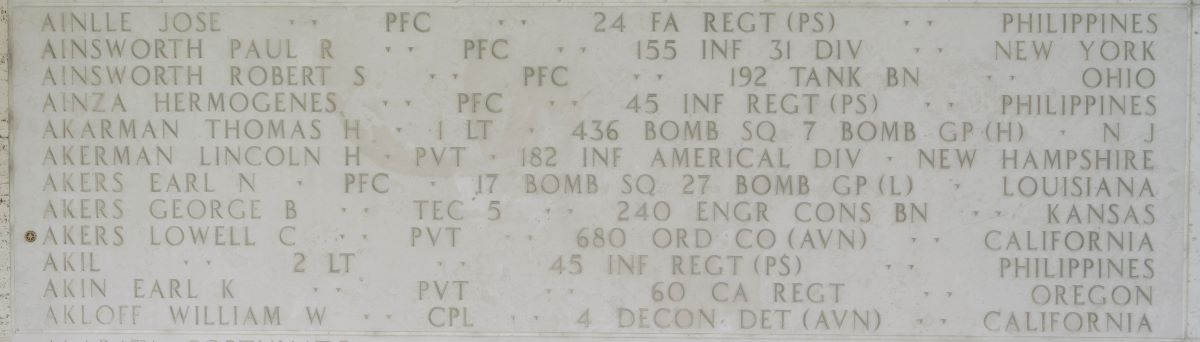
A rosette next to the name of Pvt. Lowell C. Akers on the Walls of the Missing at Manila American Cemetery signifies he has been identified. (Photo: American Battle Monuments Commission)

U.S. Army 2nd Lt. Charles S. Atteberry, 26 of Wilder, Idaho, killed during World War II, was accounted for June 4. Atteberry was assigned to the 31st Infantry Regiment, Philippine Army on the Bataan Peninsula, in the Philippines.
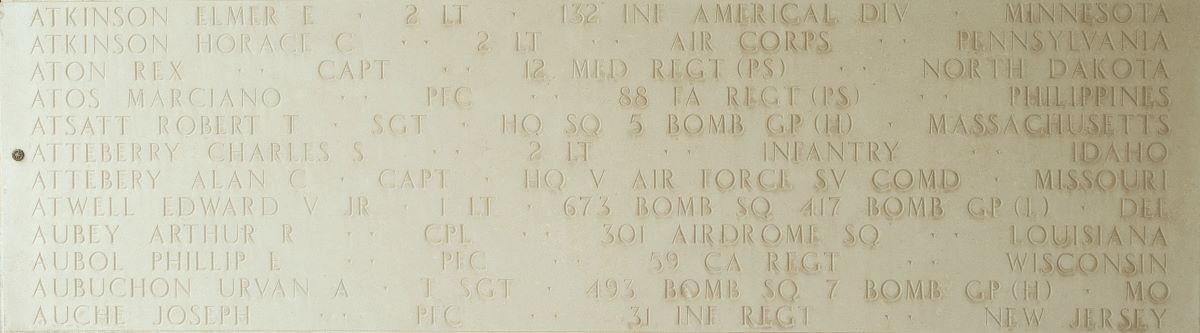
A rosette next to the name of 2nd Lt. Charles S. Atteberry on the Walls of the Missing at Manila American Cemetery signifies he has been identified. (Photo: American Battle Monuments Commission)

U.S. Army Air Forces Sgt. Sidney Burke, 22, of Pittsburgh, Pennsylvania, killed during World War II, was accounted for on April 18. Burke was a member of 22nd Bombardment Squadron (Medium), 341st Bombardment Group (Medium), 10th Air Force.
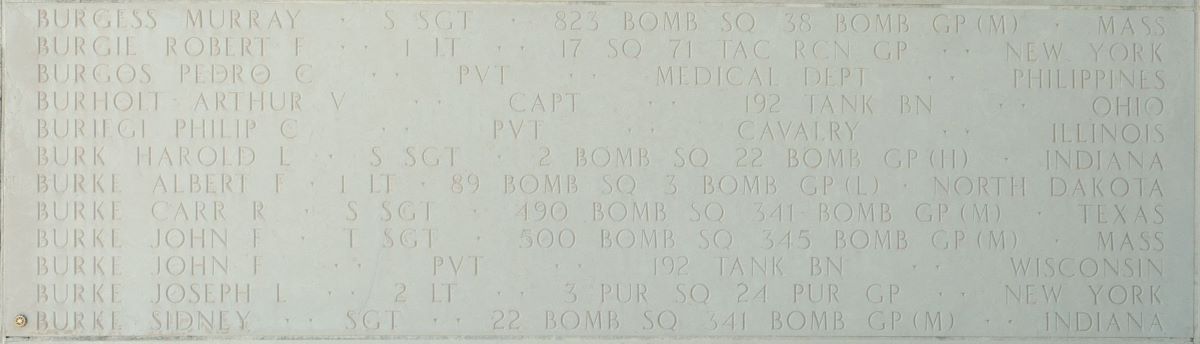
A rosette next to the name of Sgt. Sidney Burke on the Walls of the Missing at Manila American Cemetery signifies he has been identified. (Photo: American Battle Monuments Commission)

U.S. Army Air Forces Staff Sgt. Russell O. Chitwood, 27, of Hot Springs, Arkansas, killed during World War II, was accounted for March 4. Chitwood was assigned to the 359th Bombardment Squadron, 303rd Bombardment Group, Eighth Air Force, in England.
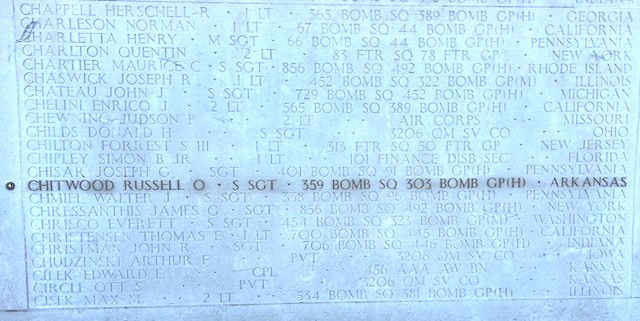
A rosette next to the name of Staff Sgt. Russell O. Chitwood on the Walls of the Missing at Cambridge American Cemetery signifies he has been identified. (Photo: American Battle Monuments Commission)

U.S. Army Air Forces Tech. Sgt. Donald A. Dorman, 21, killed during World War II, was accounted for on Sept. 19. Dorman was assigned to the 429th Bombardment Squadron, 2nd Bombardment Group, 15th Air Force.
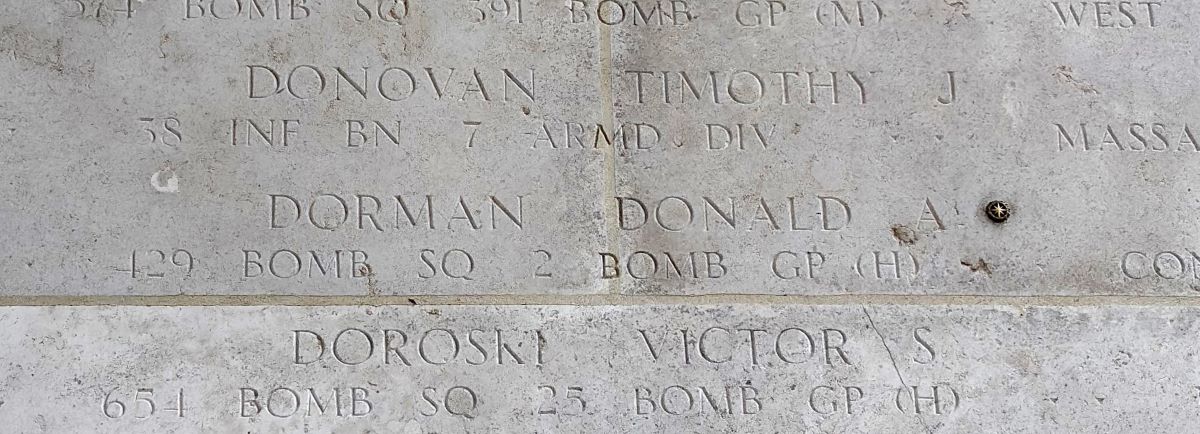
A rosette next to the name of Tech. Sgt. Donald A. Dorman on the Walls of the Missing at Henri-Chapelle American Cemetery signifies he has been identified. (Photo: American Battle Monuments Commission)

U.S. Army Pvt. Joseph A. Gala, 21, killed during World War II, was accounted for Sept. 10. Gala was assigned to Company E, 2nd Battalion, 5307th Composite Unit (Provisional), also known as “Merrill’s Marauders.”
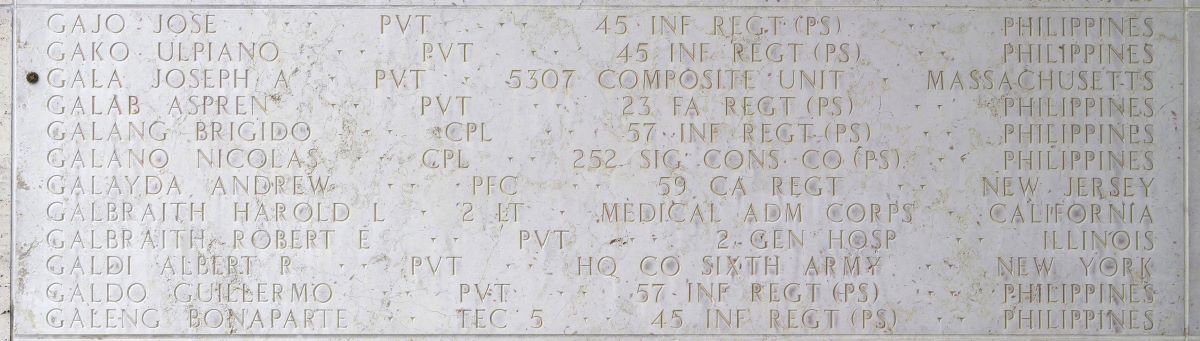
A rosette next to the name of Pvt. Joseph A. Gala on the Walls of the Missing at Manila American Cemetery signifies he has been identified. (Photo: American Battle Monuments Commission)

U.S. Army Pvt. Philip J. Geary, 37, killed during World War II, was accounted for Aug. 27. Geary was assigned to Company F, 2nd Battalion, 5307th Composite Unit (Provisional), also known as “Merrill’s Marauders.”
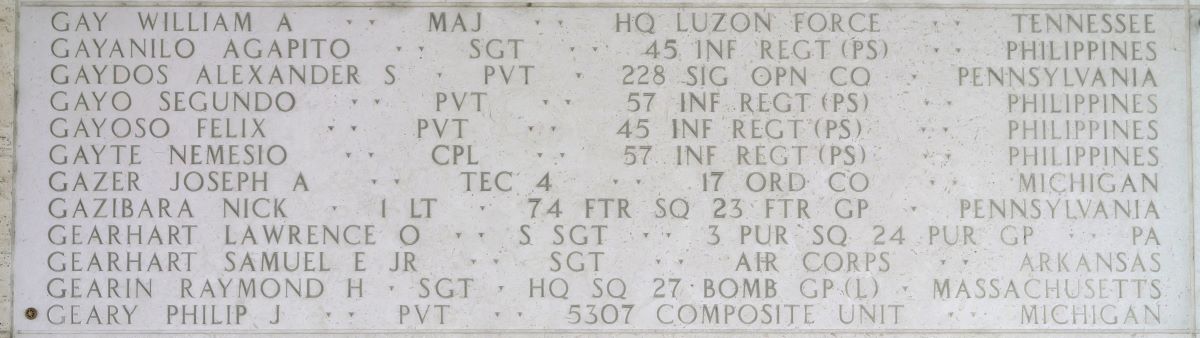
A rosette next to the name of Pvt. Philip J. Geary on the Walls of the Missing at Manila American Cemetery signifies he has been identified. (Photo: American Battle Monuments Commission)

U.S. Army Maj. Harry C. Hoffmeyer, 51, killed during World War II, was accounted for Oct. 10. Hoffmeyer was assigned to the Medical Department on the Bataan Peninsula, in the Philippines.
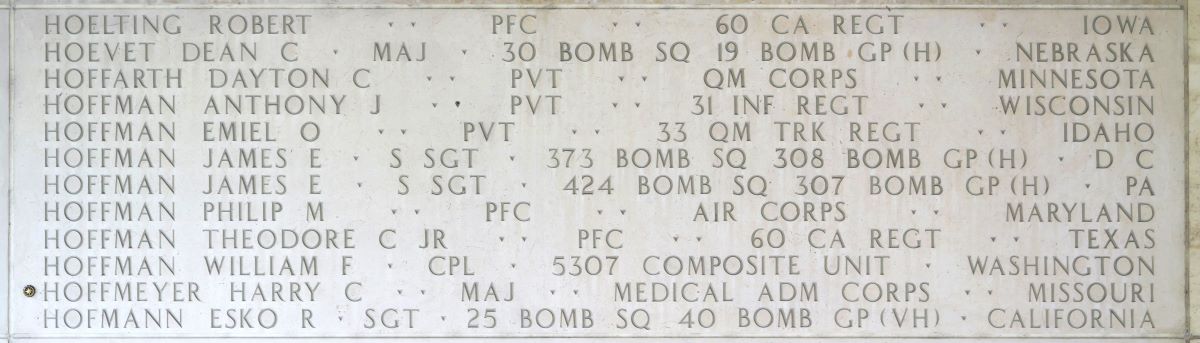
A rosette next to the name of Maj. Harry C. Hoffmeyer on the Walls of the Missing at Manila American Cemetery signifies he has been identified. (Photo: American Battle Monuments Commission)

U.S. Army Sgt. Melvin E. Jones, 22, who was captured and died as a prisoner of war during World War II, was accounted for Sept. 23. Jones was a member of Battery E, 200th Coast Artillery Regiment when Japanese forces invaded the Philippine Islands in December 1942.
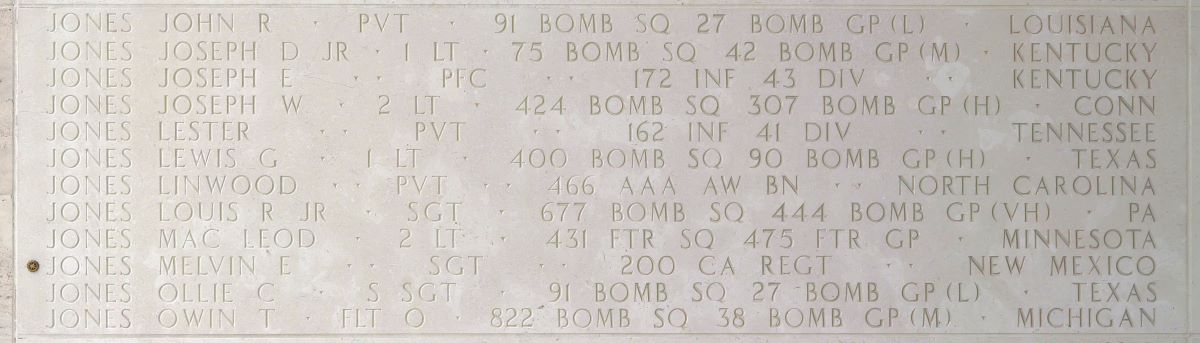
A rosette next to the name of Sgt. Melvin E. Jones on the Walls of the Missing at Manila American Cemetery signifies he has been identified. (Photo: American Battle Monuments Commission)

U.S. Army Staff Sgt. Charles H. Knecht, 27, killed during World War II, was accounted for Sept. 19. Knecht was assigned to Company C, 1st Battalion, 109th Infantry Regiment, 28th Infantry Division.
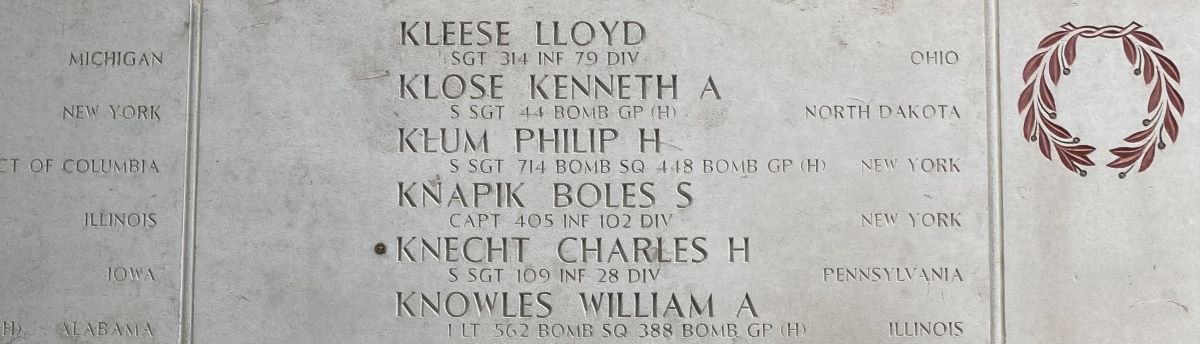
A rosette next to the name of Staff Sgt. Charles H. Knecht on the Walls of the Missing at Netherlands American Cemetery signifies he has been identified. (Photo: American Battle Monuments Commission)

U.S. Army Pvt. Condia Lynch Jr., 20, who was captured and died as a prisoner of war during World War II, was accounted for Aug. 18. Lynch was a member of 31st Infantry Regiment, when Japanese forces invaded the Philippine Islands in December 1942.
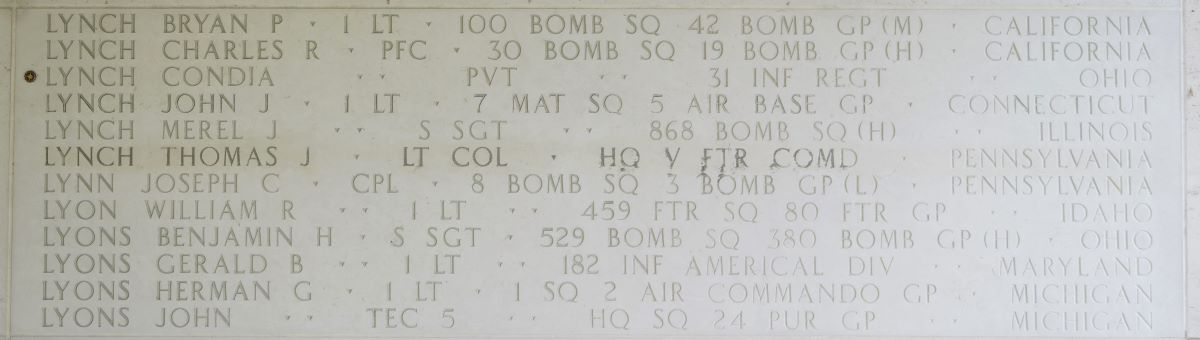
A rosette next to the name of Pvt. Condia Lynch on the Walls of the Missing at Manila American Cemetery signifies he has been identified. (Photo: American Battle Monuments Commission)

U.S. Army Air Forces Staff Sgt. John A. Pagliuso, 24, of Lyons, New York, killed during World War II, was accounted for on March 17. Pagliuso was assigned to the 405th Bombardment Squadron, 38th Bombardment Group.
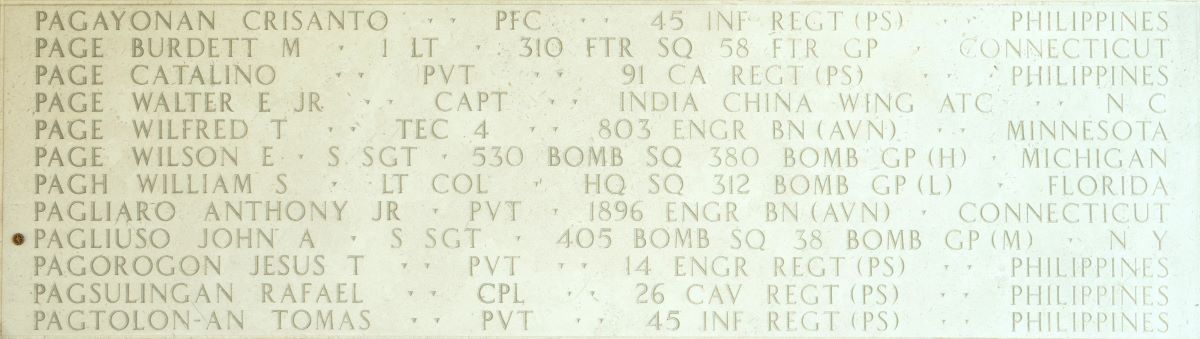
A rosette next to the name of Staff Sgt. John A. Pagliuso on the Walls of the Missing at Manila American Cemetery signifies he has been identified. (Photo: American Battle Monuments Commission)

U.S. Army Air Forces Technician Fifth Grade Gurnie J. Richard, 22, who was captured and died as a prisoner of war during World War II, was accounted for Aug. 26. Richard was assigned 17th Bombardment Squadron, 27th Bombardment Group, when Japanese forces invaded the Philippine Islands in December 1942.
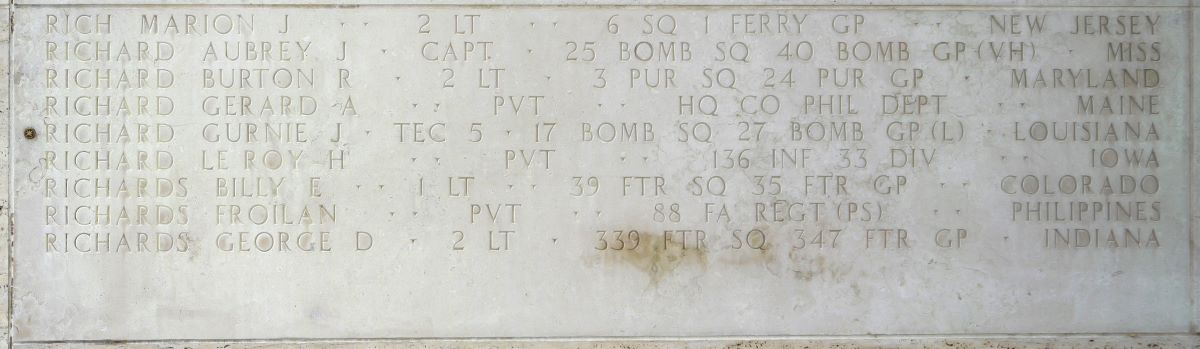
A rosette next to the name of Tech 5 Gurnie J. Richard on the Walls of the Missing at Manila American Cemetery signifies he has been identified. (Photo: American Battle Monuments Commission)

U.S. Navy Lt. j.g. Thomas A. Ruth, 26, killed during World War II, was accounted for April 8. Ruth was a member of Fighting Squadron 21, Carrier Air Group 21.
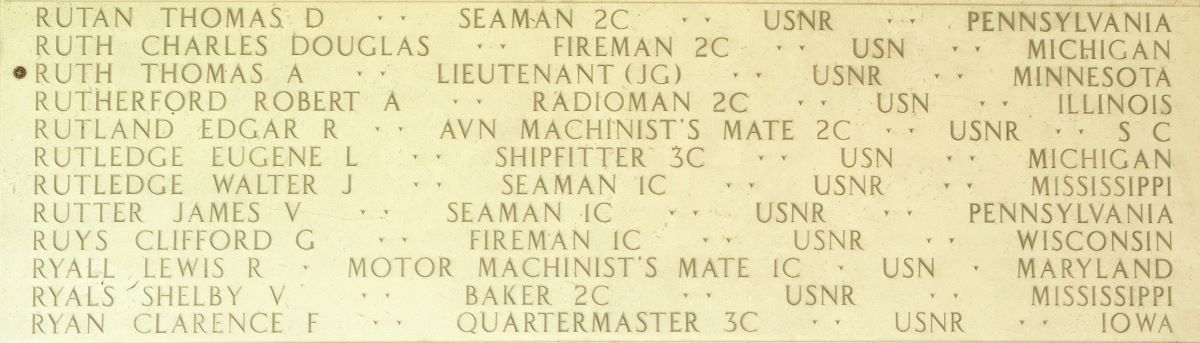
A rosette next to the name of Lt. (j.g.) Thomas A. Ruth on the Walls of the Missing at Manila American Cemetery signifies he has been identified. (Photo: American Battle Monuments Commission)

U.S. Army 1st Lt. Wilburn R. Saunders Jr., 29, killed during World War II, was accounted for Aug. 12. Saunders was assigned to Battery H, 59th Coast Artillery Regiment on the Bataan Peninsula, in the Philippines.
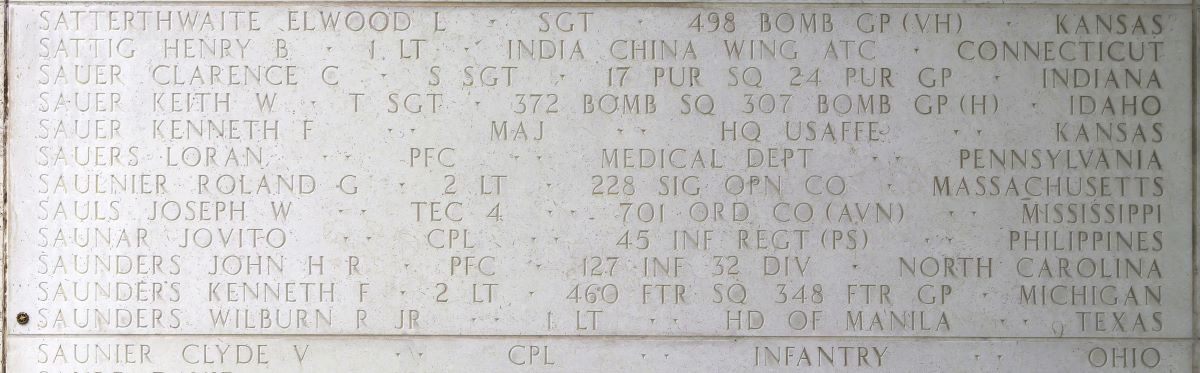
A rosette next to the name of 1st Lt. Wilburn R. Saunders Jr. on the Walls of the Missing at Manila American Cemetery signifies he has been identified. (Photo: American Battle Monuments Commission)

U.S. Army Technician Fifth Grade Ell T. Simantz, 23, of Grand Haven, Michigan, killed during World War II, was accounted for on May 9. Simantz was assigned to Service Company, 126th Infantry Regiment, 32d Infantry Division.
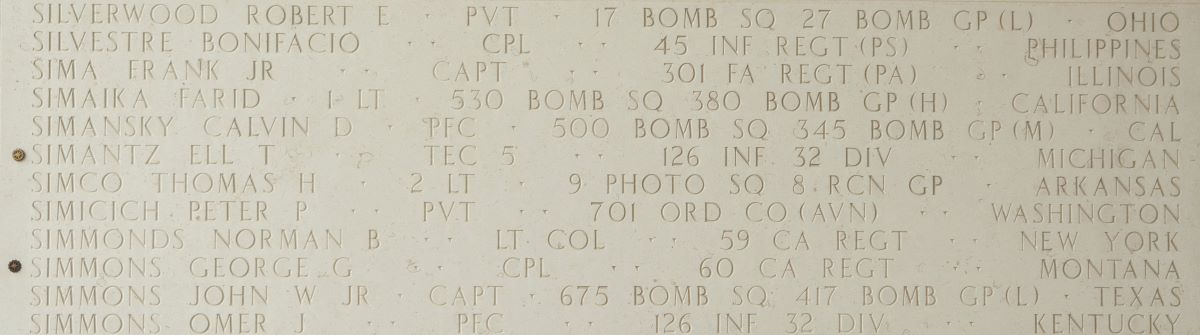
A rosette next to the name of Tech 5 Ell T. Simantz on the Walls of the Missing at Manila American Cemetery signifies he has been identified. (Photo: American Battle Monuments Commission)

U.S. Army Pfc. Richard P. Summers, 19, killed during World War II, was accounted for Sept. 10. Summers was assigned to Company C, 1st Battalion, 180th Infantry Regiment,45th Infantry Division.
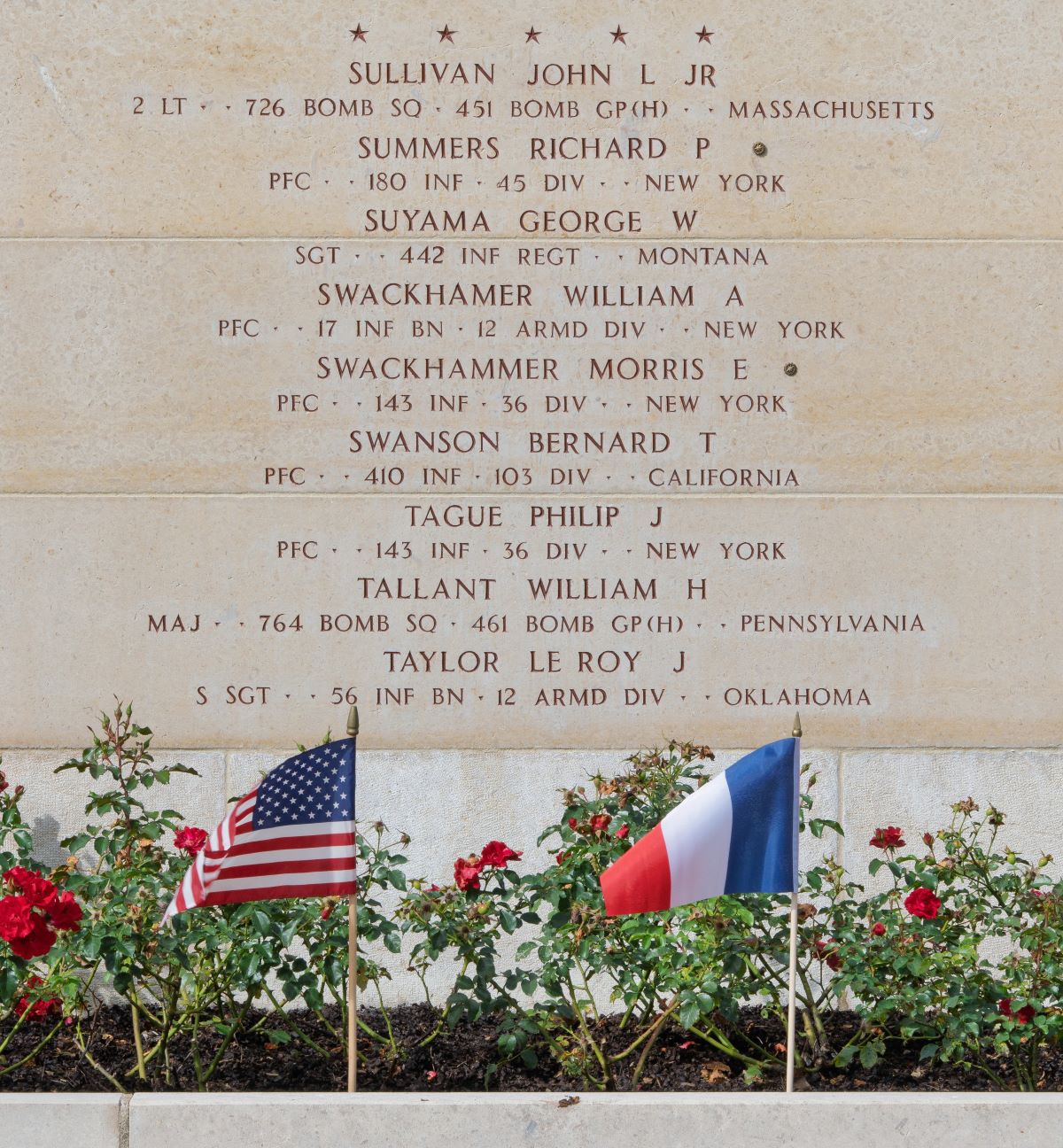
A rosette next to the name of Pfc. Richard P. Summers on the Walls of the Missing at Epinal American Cemetery signifies he has been identified. (Photo: American Battle Monuments Commission)

U.S. Army, Cpl. Richard A. Veal, 36, who was captured and died as a prisoner of war during World War II, was accounted for Sept. 29. Veal was a member of Battery C, 200th Coast Artillery Regiment when Japanese forces invaded the Philippine Islands in December 1942.
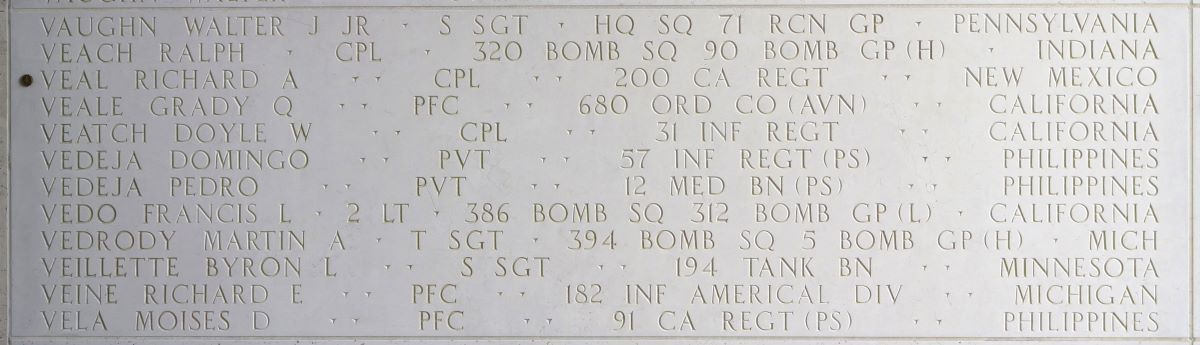
A rosette next to the name of Cpl. Richard A. Veal on the Walls of the Missing at Manila American Cemetery signifies he has been identified. (Photo: American Battle Monuments Commission)

U.S. Army Cpl. James M. Walker, 46, of Pawnee, Oklahoma, who was captured and died as a prisoner of war during World War II, was accounted for March 19, 2024. Walker was a member of 31st Infantry Regiment when Japanese forces invaded the Philippine Islands.
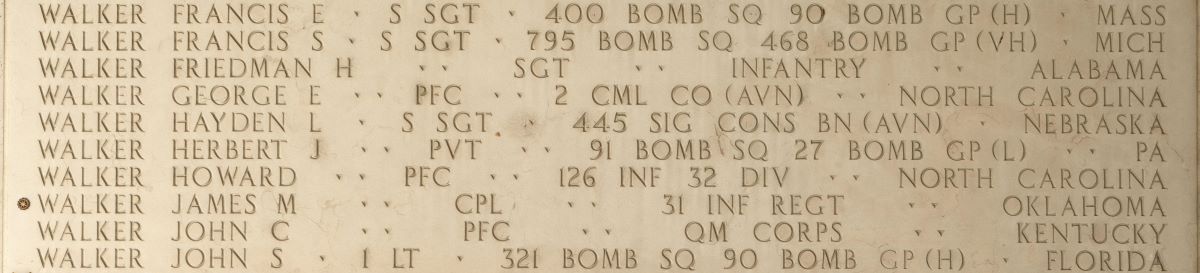
A rosette next to the name of Cpl. James M. Walker on the Walls of the Missing at Manila American Cemetery signifies he has been identified. (Photo: American Battle Monuments Commission)

U.S. Army Pfc. Milo O. Whipple, 24, killed during World War II, was accounted for Sept. 19. Whipple was assigned to Company A, 1st Battalion, 22d Infantry Regiment, 4th Infantry Division.
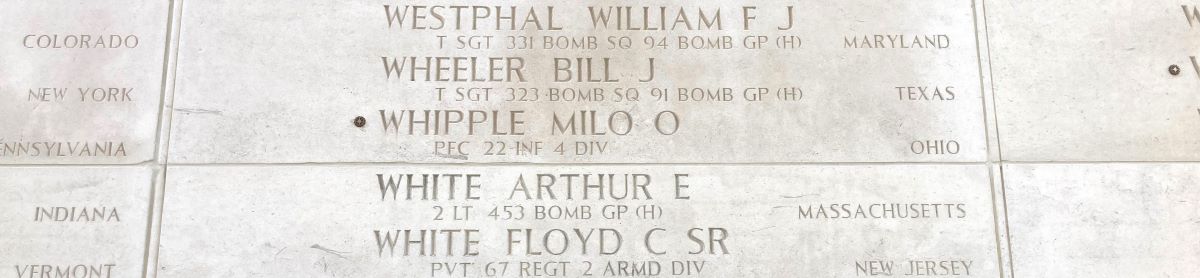
A rosette next to the name of Pfc. Milo O. Whipple on the Walls of the Missing at Netherlands American Cemetery signifies he has been identified. (Photo: American Battle Monuments Commission)

U.S. Army Pfc. Charles B. Winters, 22, who was captured and died as a prisoner of war during World War II, was accounted for Aug. 14. Winters was a member of 808th Military Police Company, when Japanese forces invaded the Philippine Islands in December 1942.
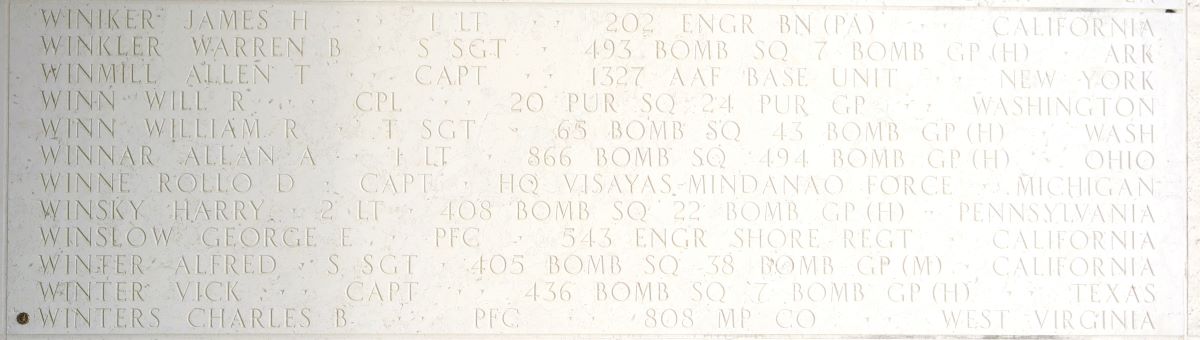
A rosette next to the name of Pfc. Charles B. Winters on the Walls of the Missing at Manila American Cemetery signifies he has been identified. (Photo: American Battle Monuments Commission)

U.S. Army Technician Fifth Grade Daniel Wyatt, 39, of New Orleans, Louisiana, killed during World War II, was accounted for May 7. Wyatt was assigned to Company E, 364th Engineer General Service Regiment, U.S. Army Corps of Engineers.
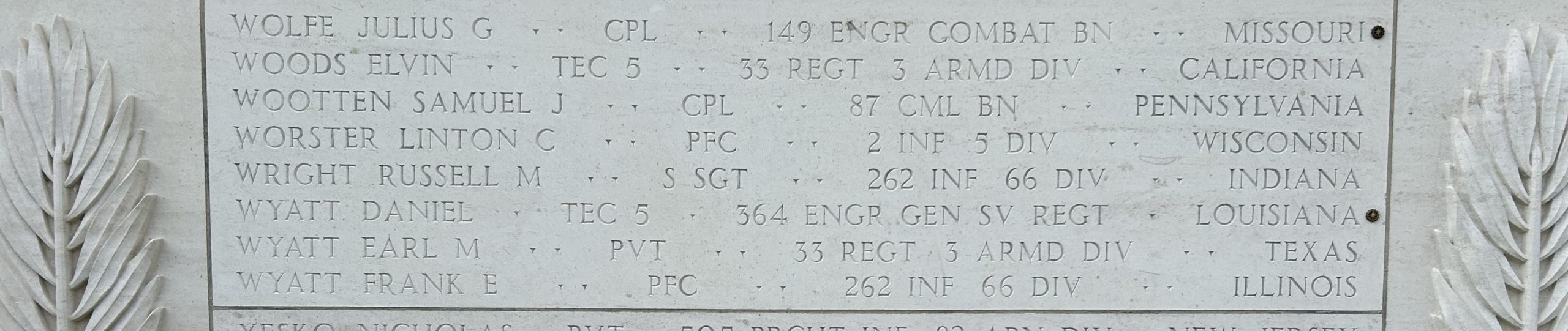
A rosette next to the name of Tech. 5 Daniel Wyatt on the Walls of the Missing at Normandy American Cemetery signifies he has been identified. (Photo: American Battle Monuments Commission)


No image description available

About ABMC

The American Battle Monuments Commission operates and maintains 26 cemeteries and 31 federal memorials, monuments and commemorative plaques in 17 countries throughout the world, including the United States. 

Since March 4, 1923, the ABMC’s sacred mission remains to honor the service, achievements, and sacrifice of more than 200,000 U.S. service members buried and memorialized at our sites. 

Related Content

Cemeteries add rosettes for October, November service member identification announcements

ABMC’s WWII Headstones begin their journey in the marble quarry of Lasa

American Battle Monuments Commission leadership attend Veterans Day ceremonies

5 things you may not know about Henri-Chapelle Cemetery

Florence American Cemetery and Memorial Battle Map Renovation

Clark Veterans Cemetery Veterans Day Ceremony Cancellation Notice