An official website of the United States government. Here's how you know.


 Countdown to




In honor of Freedom 250, the celebration of the United States of America’s birth as a nation, the American Battle Monuments Commission is highlighting America’s long arc of military service and sacrifice beginning with the American Revolution and continuing with ABMC’s mission today.
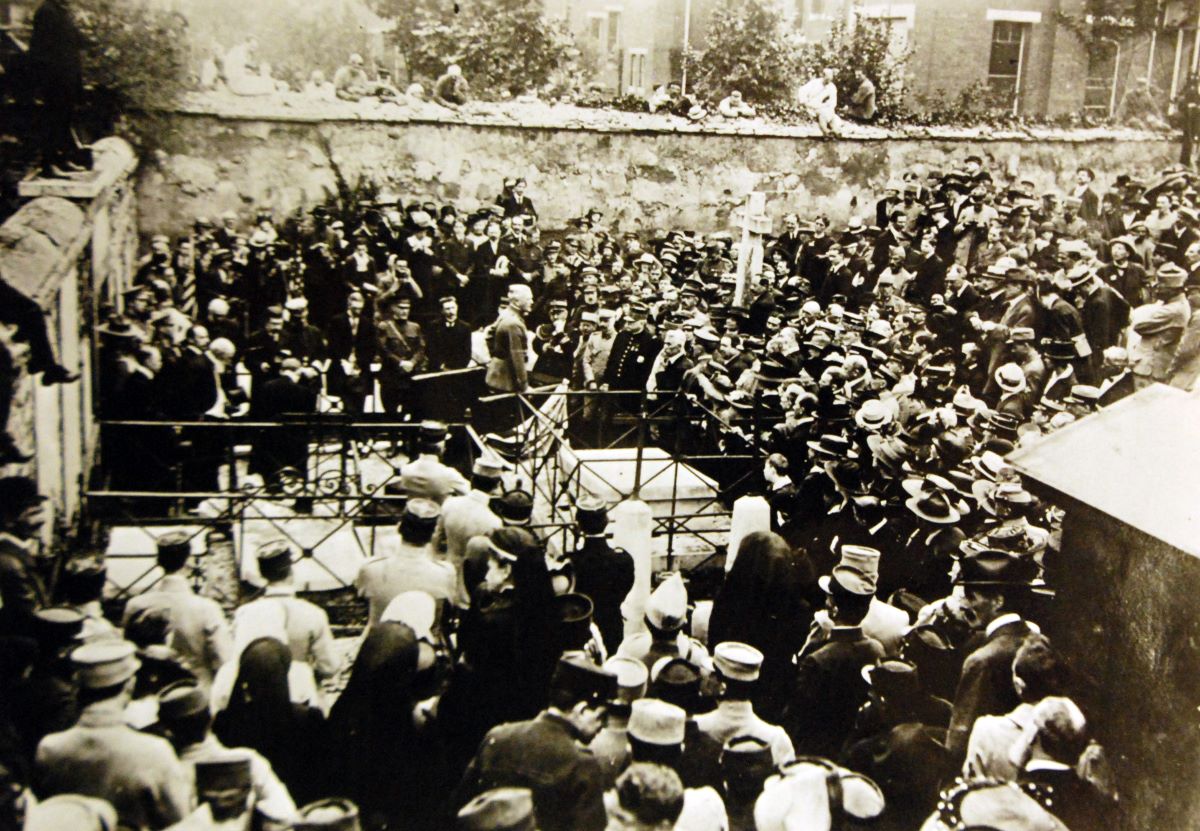
“Lafayette, we are here.”
These famous words were spoken by Lt. Col. Charles E. Stanton over the grave of the Marquis de Lafayette at Picpus Cemetery in Paris. Accompanied Gen. John J. Pershing and the first American Expeditionary Forces in France in 1917, the words marked a favor returned amongst allies.
The French had come to the aid of the U.S. during the Revolutionary War, with Lafayette a central figure who remains a symbol of Franco-American friendship today.
Like the American World War I aviators who would later volunteer to fight for France with the Lafayette Escadrille, the French aristocrat sailed to the U.S. to fight before France formally backed the colonies’ bid for freedom.
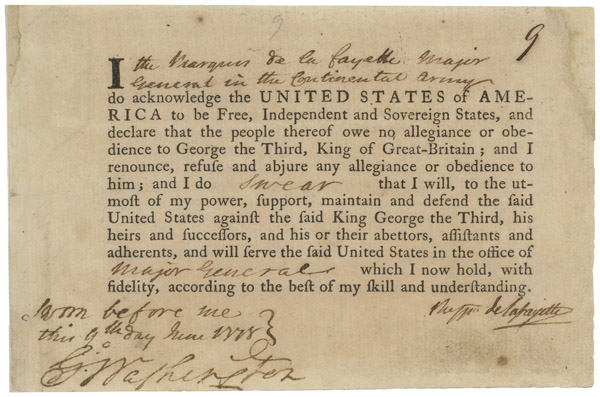
Lafayette was commissioned as a major general in the Continental Army and served on George Washington’s staff. Among his actions during the revolution, Lafayette was wounded at Brandywine, led his first battle in Gloucester, New Jersey, and wintered with Washington’s troops at Valley Forge. Lafayette was a key lobbyist for France’s support of the American cause and took part in negotiations with Great Britain for the Treaty of Paris signed in 1783.
For the 50th anniversary of the American Revolution, Lafayette – one of the last revolutionary heroes – returned in 1824 to tour the 24 states in the union and Washington. He was met with galas, parades, and ceremonies across the country. Returning to France after the 13-month-tour, Lafayette brought home soil from Bunker Hill to be sprinkled on his grave upon his death. His son, George Washington Lafayette, honored this wish after his death in 1834.
As the U.S. struggled with its support of the Great War in Europe, Lafayette’s name was invoked as a symbol of the enduring friendship between the U.S. and France to invoke popular support for the war.
The French had come to the aid of the United States during the Revolutionary War, and in 1917, French citizens showed their gratitude and respect for the alliance renewed and the favor returned.
This article is one in a series of articles highlighting ABMC’s ties to Freedom 250. Look for more at: Commemorating America’s 250th Anniversary at ABMC